


Default
Door staff@engadget.com (Steve Dent) - 28 Aug 2026
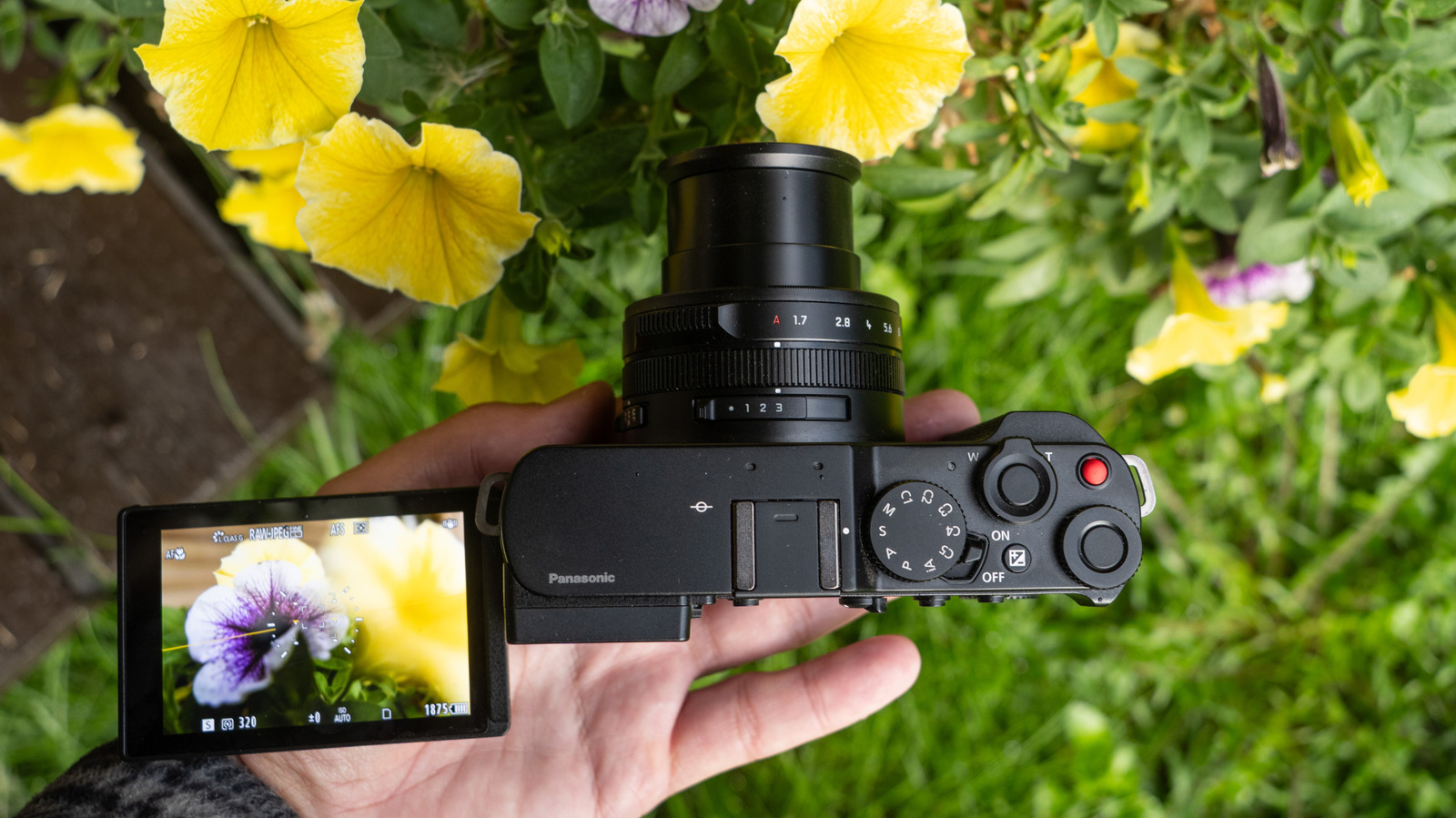
As is the case with several other compacts, including the Fujifilm GFX 100RF, the Panasonic L10 has a dedicated switch that lets you choose from four aspect ratios: 4:3, 3:2, 16:9 and 1:1. Personally, I prefer to shoot using the full sensor area and crop later, but this feature is great for photographers who want to take JPEG photos and share them quickly.
If you're one of those, another control you'll like is the "LUT" button. Along with Panasonic's preset photo styles, like L.ClassicGold (above) and Leica Monochrome, you can download or create your own photo and video styles (called LUTs) and apply them to your shots in real time. These LUTs can be downloaded from Panasonic's Lumix Lab app.
Steve Dent for Engadget
With its updated sensor, the L10 delivers sharper photos with less noise at lower ISO levels than the LX100 II. The extra resolution also lets you crop into photos a bit more than before without loss of detail.
JPEG colors straight out of the camera look great and require little retouching. The dual-gain sensor also delivers surprisingly good low-light performance for a Micro Four Thirds Camera. Very little noise is visible up to ISO 2,500, and it's well managed beyond that up to about ISO 12,800. That said, it's always better to have more light with a small-sensor camera, as noise levels can quickly get out of control, particularly with underexposed shots.
Steve Dent for Engadget
RAW files are relatively easy to edit and give you room to dial down highlights or bring up detail in shadows. Again, the small sensor puts the L10 at a disadvantage to full-frame cameras in that regard, as more noise will appear at higher ISOs.
At the same time, the L10 has an automatic dynamic range boost function that the LX100 II lacked. It uses both the high- and low-gain circuits, and combines them into one photo, HDR style. That helps boost dynamic range in bright sunlight and other tricky situations.
If you're one of those, another control you'll like is the "LUT" button. Along with Panasonic's preset photo styles, like L.ClassicGold (above) and Leica Monochrome, you can download or create your own photo and video styles (called LUTs) and apply them to your shots in real time. These LUTs can be downloaded from Panasonic's Lumix Lab app.
Steve Dent for Engadget
With its updated sensor, the L10 delivers sharper photos with less noise at lower ISO levels than the LX100 II. The extra resolution also lets you crop into photos a bit more than before without loss of detail.
JPEG colors straight out of the camera look great and require little retouching. The dual-gain sensor also delivers surprisingly good low-light performance for a Micro Four Thirds Camera. Very little noise is visible up to ISO 2,500, and it's well managed beyond that up to about ISO 12,800. That said, it's always better to have more light with a small-sensor camera, as noise levels can quickly get out of control, particularly with underexposed shots.
Steve Dent for Engadget
RAW files are relatively easy to edit and give you room to dial down highlights or bring up detail in shadows. Again, the small sensor puts the L10 at a disadvantage to full-frame cameras in that regard, as more noise will appear at higher ISOs.
At the same time, the L10 has an automatic dynamic range boost function that the LX100 II lacked. It uses both the high- and low-gain circuits, and combines them into one photo, HDR style. That helps boost dynamic range in bright sunlight and other tricky situations.