


Default
Door staff@engadget.com (Filipe Espósito) - 13 Oct 2026
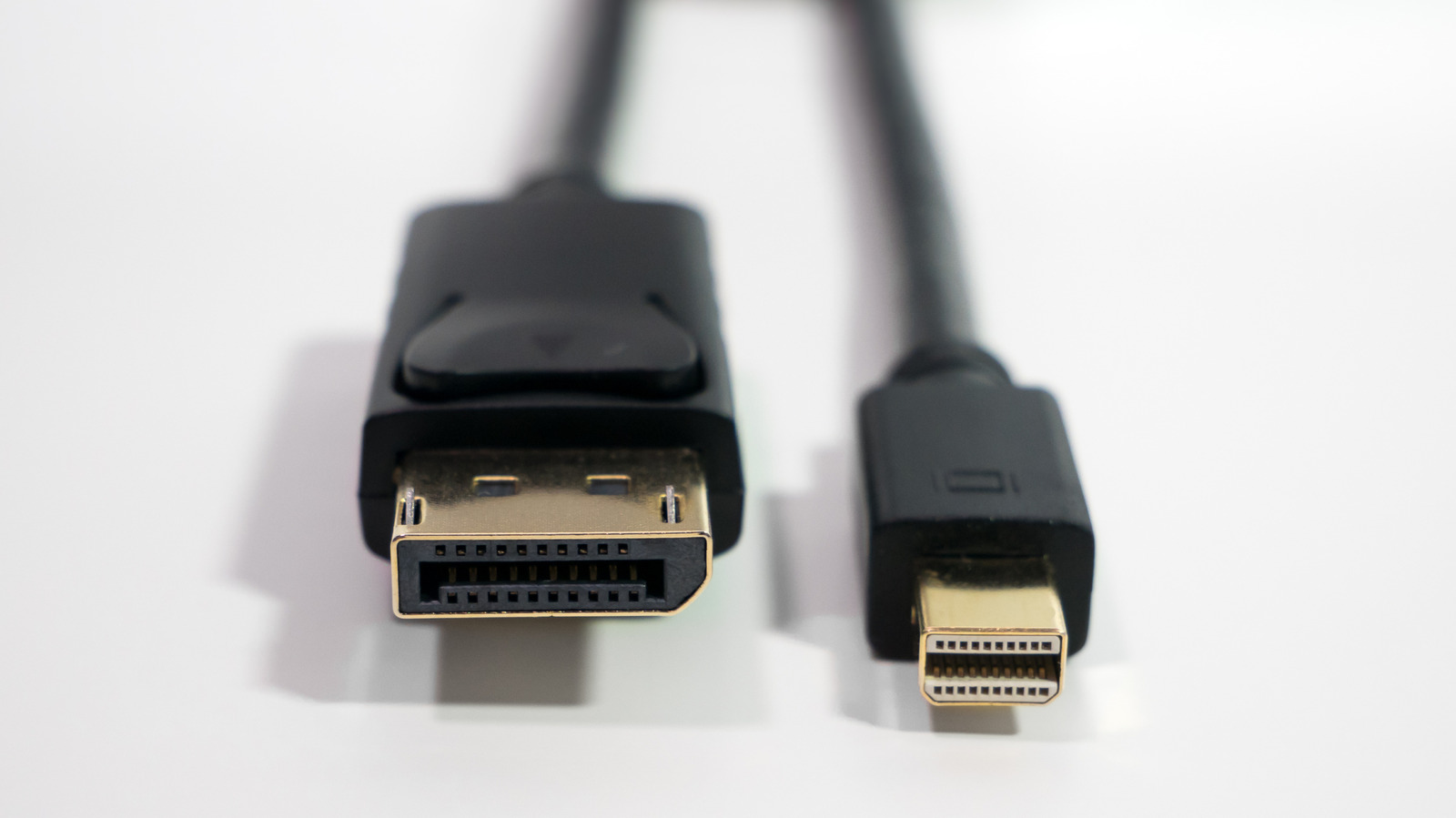
Mini DisplayPort is called "mini" for a reason. The full-size version (simply called DisplayPort) supports the same core specifications, but with a larger connector. Apple always opted for the tiny version because it fits better on smaller computers like MacBooks and the Mac mini.
It doesn't matter whether you use DisplayPort (DP) or Mini DisplayPort — both can transmit video and audio through a single cable. Compared to older connectors like DVI and VGA, one of the main advantages of DisplayPort is that it offers much higher bandwidth. Depending on the generation, DP can handle resolutions up to 8K and beyond, at high frame rates (144+Hz) depending on the resolution. Meanwhile, older connectors struggle with anything above 1080p.
When the Thunderbolt standard emerged, its first two iterations used the Mini DisplayPort connector. While a standard Mini DP port only carries video and audio, Thunderbolt also supports high-speed data transfers. That meant the same connector could be used for video, audio and data — perfect for accessories like Apple's Cinema Display.
In late 2015 and 2016, the Thunderbolt 3 standard arrived and switched to the USB-C connector. Apple and other PC manufacturers quickly moved to USB-C or HDMI, leaving the Mini DisplayPort connector behind. These days, USB-C has become the standard for nearly everything. Not only can it support high-speed data transfer, but it can also handle video, audio and even the Thunderbolt protocol — all in a single, small reversible connector. Not every USB-C port can handle the same tasks, but you'll see some version of it on almost every device.
To further push Mini DisplayPort down, USB-C also supports DisplayPort Alternate Mode, meaning a compatible USB-C cable and ports can carry the same DisplayPort signal through the more modern cable. PC makers have no reason to have people buy a Mini DP-to-DP cable when they can simply buy a USB-C-to-DP cable.
It doesn't matter whether you use DisplayPort (DP) or Mini DisplayPort — both can transmit video and audio through a single cable. Compared to older connectors like DVI and VGA, one of the main advantages of DisplayPort is that it offers much higher bandwidth. Depending on the generation, DP can handle resolutions up to 8K and beyond, at high frame rates (144+Hz) depending on the resolution. Meanwhile, older connectors struggle with anything above 1080p.
When the Thunderbolt standard emerged, its first two iterations used the Mini DisplayPort connector. While a standard Mini DP port only carries video and audio, Thunderbolt also supports high-speed data transfers. That meant the same connector could be used for video, audio and data — perfect for accessories like Apple's Cinema Display.
In late 2015 and 2016, the Thunderbolt 3 standard arrived and switched to the USB-C connector. Apple and other PC manufacturers quickly moved to USB-C or HDMI, leaving the Mini DisplayPort connector behind. These days, USB-C has become the standard for nearly everything. Not only can it support high-speed data transfer, but it can also handle video, audio and even the Thunderbolt protocol — all in a single, small reversible connector. Not every USB-C port can handle the same tasks, but you'll see some version of it on almost every device.
To further push Mini DisplayPort down, USB-C also supports DisplayPort Alternate Mode, meaning a compatible USB-C cable and ports can carry the same DisplayPort signal through the more modern cable. PC makers have no reason to have people buy a Mini DP-to-DP cable when they can simply buy a USB-C-to-DP cable.