


Default
Door staff@engadget.com (Husain Parvez) - 14 Nov 2026
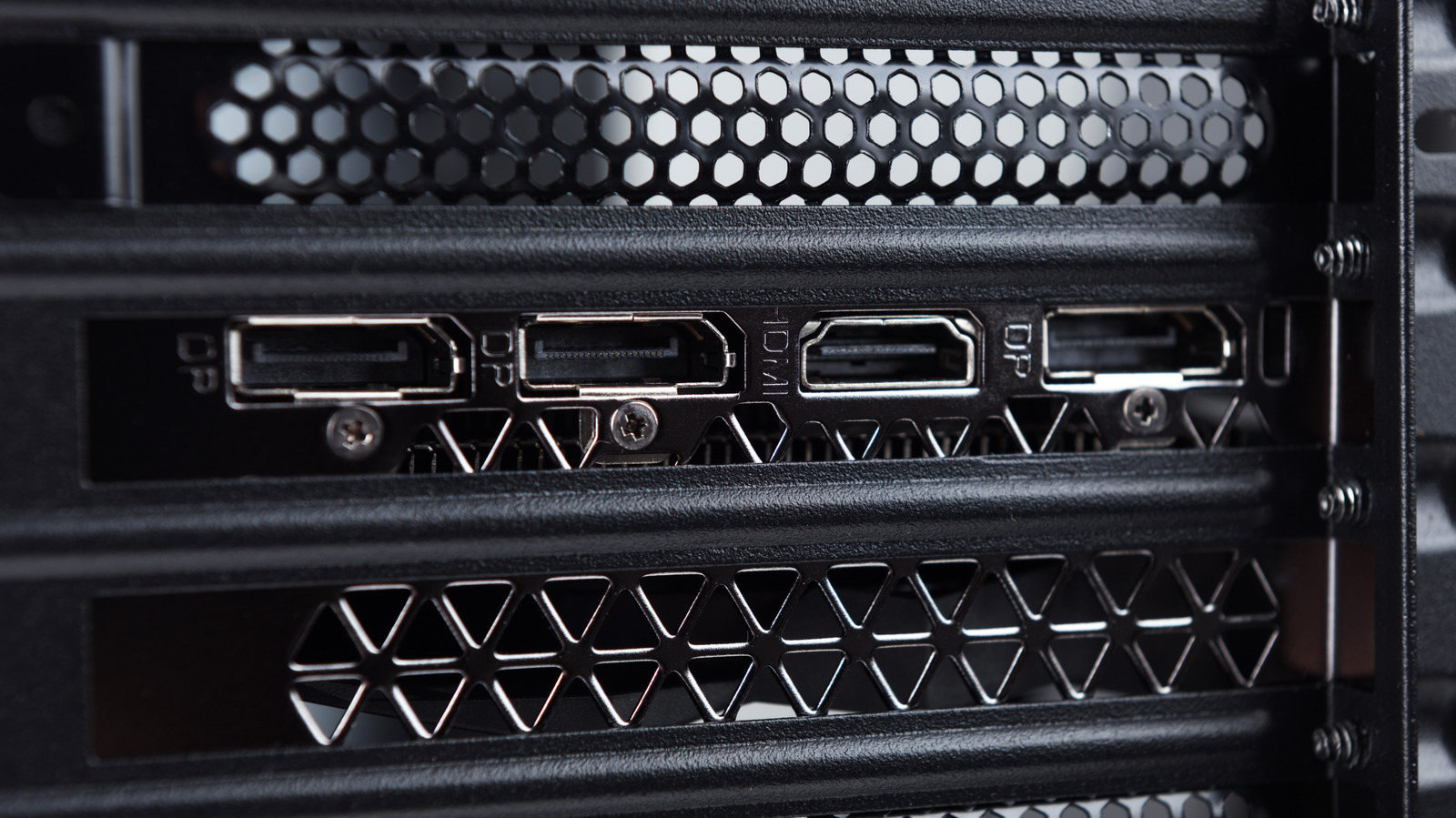
Luckily, the correct ports are typically easy to find. The motherboard's video outputs are grouped with its USB, Ethernet and audio ports. The graphics card has its own outputs on a separate expansion bracket, typically lower down on the back of a conventional tower. They're often horizontal rather than vertical, but orientation isn't universal, so check which ports belong to the graphics card.
Turn off the PC, move the monitor cable to the graphics card and select the corresponding input on the monitor. Both HDMI and DisplayPort support high-refresh-rate gaming, provided your graphics card, monitor and cable support the resolution and refresh rate you want. DisplayPort comes standard on most modern gaming monitors, but if you are already using HDMI and it is working at the resolution and refresh rate you need, then you don't need to purchase a new cable. For Windows 11, go to Settings > System > Display > Advanced display and check the refresh rate.
Do remember, though, that a 100Hz monitor that's set to 60Hz will only show 60 updates per second, no matter what the graphics card renders. If your screen goes black after switching to the graphics card, try a different GPU port or cable. Before checking the power connectors or seating on the card, shut down and unplug the PC. Finally, if integrated graphics aren't disabled, you can even connect a second monitor to the motherboard's output, depending on your system's compatibility.
Turn off the PC, move the monitor cable to the graphics card and select the corresponding input on the monitor. Both HDMI and DisplayPort support high-refresh-rate gaming, provided your graphics card, monitor and cable support the resolution and refresh rate you want. DisplayPort comes standard on most modern gaming monitors, but if you are already using HDMI and it is working at the resolution and refresh rate you need, then you don't need to purchase a new cable. For Windows 11, go to Settings > System > Display > Advanced display and check the refresh rate.
Do remember, though, that a 100Hz monitor that's set to 60Hz will only show 60 updates per second, no matter what the graphics card renders. If your screen goes black after switching to the graphics card, try a different GPU port or cable. Before checking the power connectors or seating on the card, shut down and unplug the PC. Finally, if integrated graphics aren't disabled, you can even connect a second monitor to the motherboard's output, depending on your system's compatibility.