


Default
Door staff@engadget.com (Roger Fingas) - 09 Nov 2026
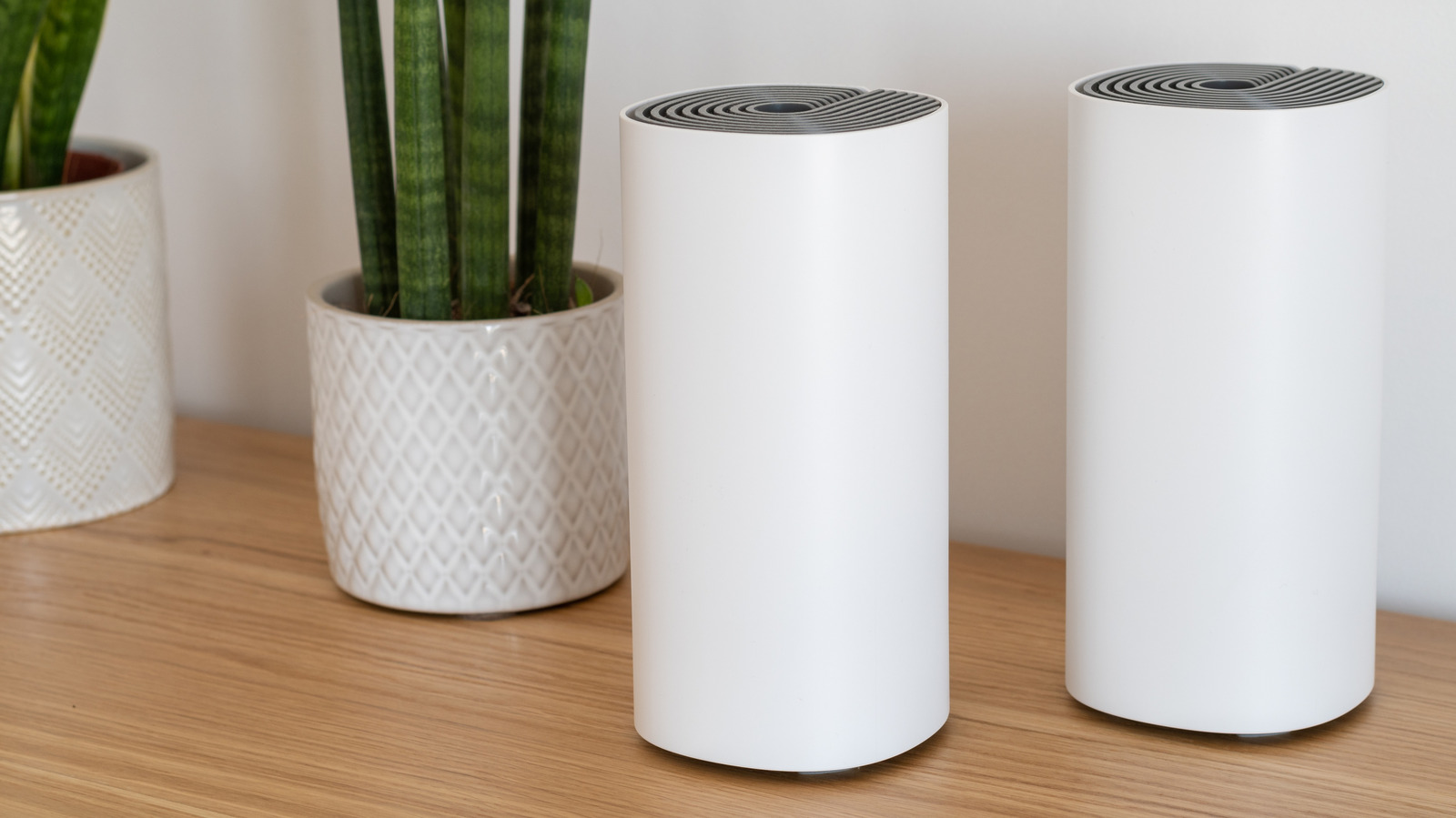
The main advantage of mesh Wi-Fi is range. In a mesh system, each satellite router acts as a sort of repeater for the gateway router that connects to your modem or fiber terminal. In theory, a relatively cheap kit like an Eero 7 two-pack can cover up to 4,000 square feet. If you need more coverage, you just add another compatible router. Conversely, standalone products have a fixed coverage radius unless you buy a Wi-Fi extender.
Unlike extenders, mesh systems enable seamless transitions. There are no separate SSIDs (network IDs) — they simply hand devices off from one unit to another based on how close they are. This avoids the hassle of manual SSID selection and the problems that sometimes arise when devices need to talk to each other and assume a shared network. You also get more consistent speeds, as a signal should never degrade much unless you roam into the wider world.
This seamlessness comes with downsides beyond price. Since mesh products depend on unified SSIDs, you can't assign separate IDs for each frequency band; band steering is automatic. I know from experience that mesh routers can trip up cheap 2.4GHz-only smart home accessories because their setup apps often can't find them when your phone is on 5 or 6GHz. On the flip side, you might want to force devices like PCs or VR headsets over to 5 or 6GHz for the best possible bandwidth.
It's also worth noting that with cheaper mesh products, the backhaul between routers sometimes shares the same bands as connecting devices. When that happens, performance can suffer considerably. If you don't have the budget for a tri- or quad-band system, there may not be much point in going with mesh technology unless filling in dead zones is all that matters.
Unlike extenders, mesh systems enable seamless transitions. There are no separate SSIDs (network IDs) — they simply hand devices off from one unit to another based on how close they are. This avoids the hassle of manual SSID selection and the problems that sometimes arise when devices need to talk to each other and assume a shared network. You also get more consistent speeds, as a signal should never degrade much unless you roam into the wider world.
This seamlessness comes with downsides beyond price. Since mesh products depend on unified SSIDs, you can't assign separate IDs for each frequency band; band steering is automatic. I know from experience that mesh routers can trip up cheap 2.4GHz-only smart home accessories because their setup apps often can't find them when your phone is on 5 or 6GHz. On the flip side, you might want to force devices like PCs or VR headsets over to 5 or 6GHz for the best possible bandwidth.
It's also worth noting that with cheaper mesh products, the backhaul between routers sometimes shares the same bands as connecting devices. When that happens, performance can suffer considerably. If you don't have the budget for a tri- or quad-band system, there may not be much point in going with mesh technology unless filling in dead zones is all that matters.